Notice
You are now leaving Polygon Restoration's website and will be directed to another country in the group.
Do you want to proceed?
Notice
You are now leaving Polygon Restoration's website and will be directed to another country in the group.
Do you want to proceed?

Mass timber is designed to provide strength and stability, but its moisture content plays an important role in how the material performs. Wood that is too dry can shrink and crack, while excessive moisture can increase the risk of mold and decay.
Understanding the moisture risk scale helps construction teams recognize potential issues and determine when conditions may need to be corrected.
Understanding the Moisture Content
Wood moisture content (MC) is the amount of moisture present in the wood. The scale below illustrates how risk changes as moisture levels increase or decrease.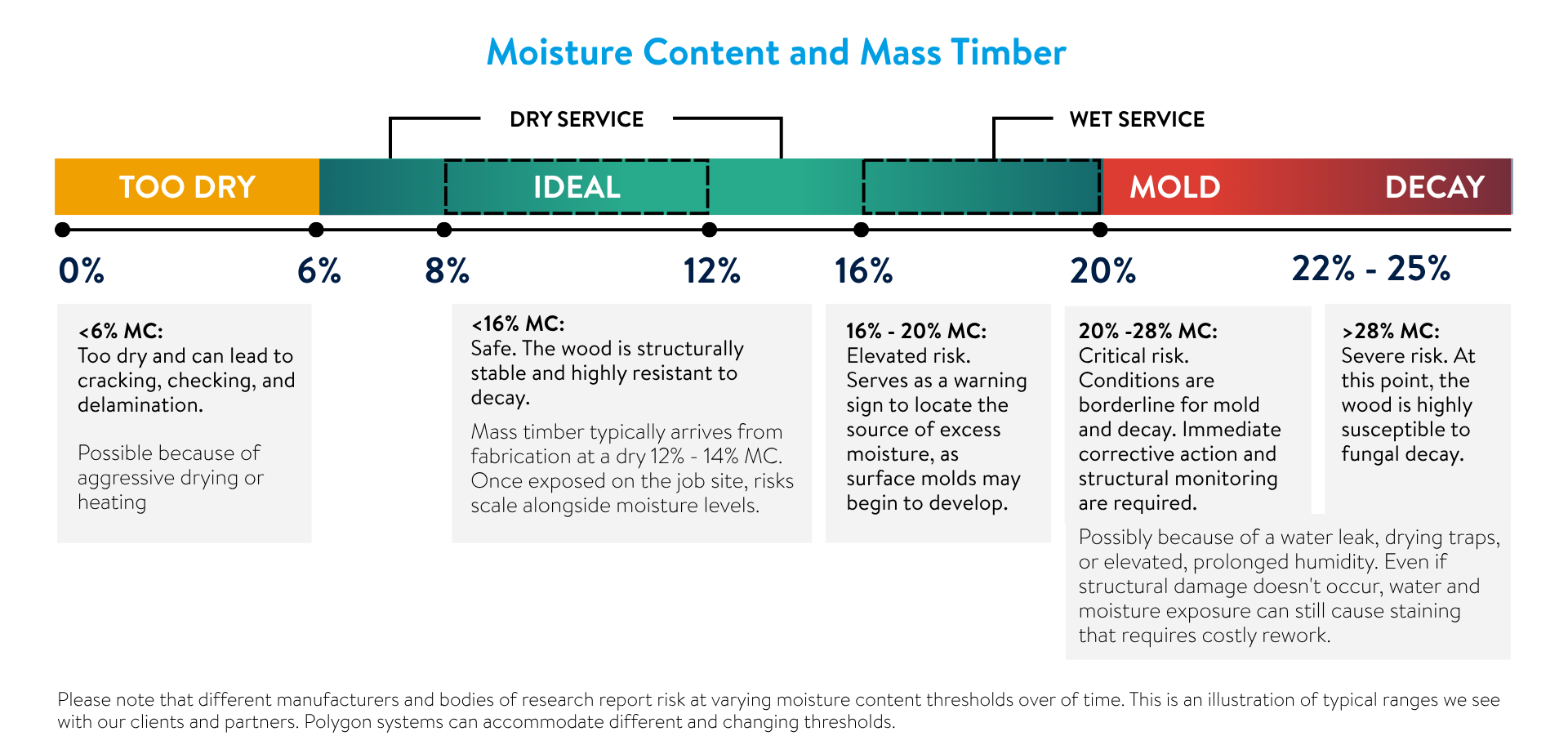
These ranges are general guidelines. Actual risk depends on exposure duration, environmental conditions, and the wood's intended use.
Monitoring and Managing Moisture
Mass timber can absorb moisture during transportation, on-site storage, and construction. Even when materials are covered, rainwater can enter through openings or accumulate on the wood. During construction, moisture-latent materials can slow acclimation or pipe leaks or water intrusion can expose mass timber.
Monitoring moisture content helps teams identify changing conditions and determine when intervention is needed. The appropriate response depends on the readings:
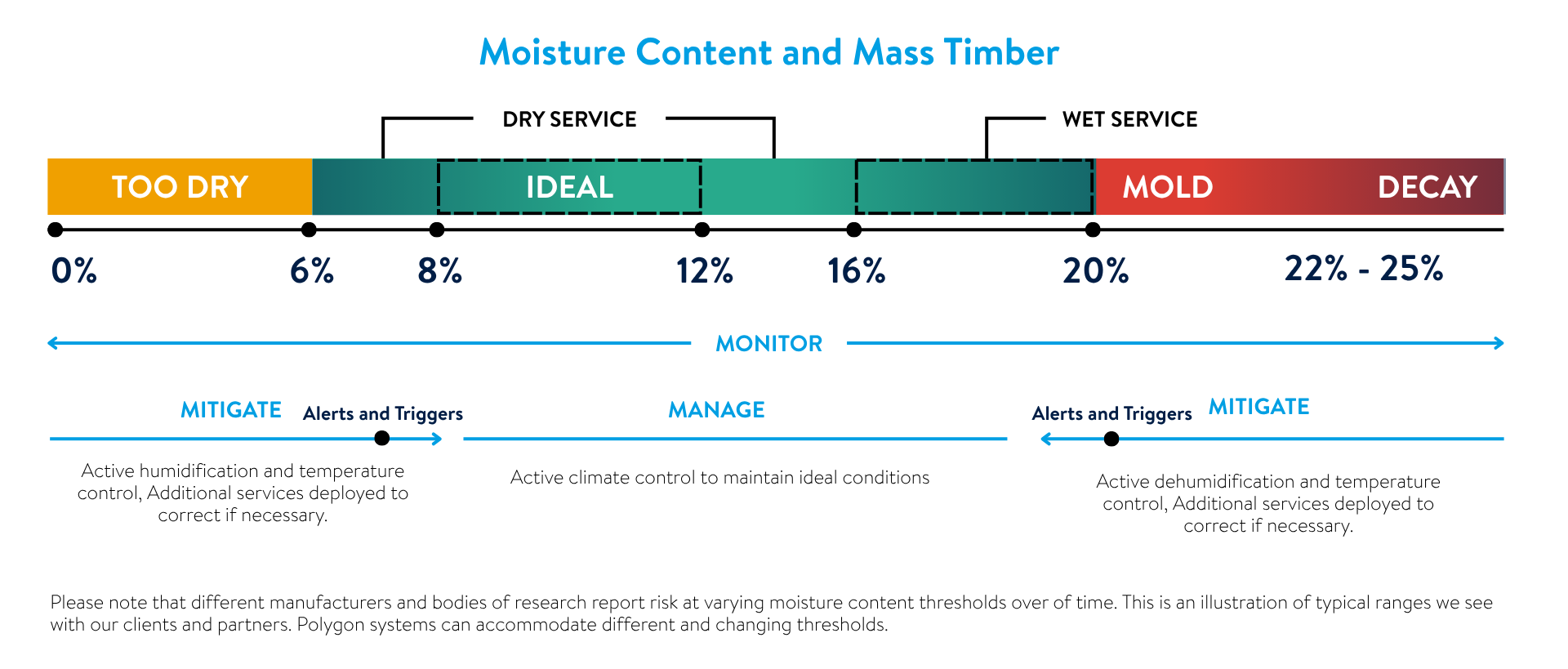
Identifying moisture issues early gives construction teams an opportunity to address them before the wood is enclosed or prolonged exposure leads to further concerns.
Polygon provides moisture monitoring and climate-control solutions to help construction teams manage moisture levels and maintain appropriate conditions throughout mass timber projects.
Visit Mass Timber Moisture Management to learn more.

Emergency Support
1-800-422-6379Send an email
us_info@polygongroup.com24/7 Hotline
Urgent equipment and operational support
Property damage
Documents and contents damage
24/7 Emergency:
United States: 1-800-422-6379
Canada: 1-888-702-4782
Your questions and comments are important to us. Please send us your information with a description of your needs and we will connect with you promptly.
Polygon US Headquarters
15 Sharpners Pond Road, Building F North Andover, MA 01845
Phone: 1-800-422-6379
See all our US locations here: Polygon US office locations
For global support, please contact one of our offices listed here: Our Global offices - Polygon Group